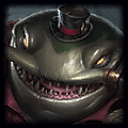
Tahm Kench Support Build 16.21
Tahm Kench Support build in patch 16.21 has a 36.4% win rate over 33 games. This setup focuses on boots are an early movement purchase built to improve baseline mobility and reduce how punishing bad positioning feels. they are mainly bought to help with spacing, lane movement, and getting to fights or objectives faster.




Tahm Kench Build Guide & Strategy (Patch 16.21)
About Tahm Kench
Tahm Kench is a warden-tank who controls close-range fights through tongue picks, thick durability, and Devour plays that either save an ally or remove an enemy from their preferred position. He is excellent at punishing oversteps and denying burst onto key teammates, but he is much less threatening when kited or when he uses his protection tools too early.
Tahm Kench Build Strategy & Items
Boots support a tempo-oriented style where movement matters as much as raw stats, letting you weave in and out of trades, dodge skillshots, and reach waves or skirmishes sooner. They fit gameplans built around cleaner rotations, safer lane resets, and better control over distance in fights. This component fits front-to-back teamfighting and committed skirmishing because the extra health makes stepping into danger less risky. It supports gameplans built around soaking cooldowns, surviving burst long enough to keep fighting, and creating sturdier engage or peel windows. This item supports more assertive spell-based play by making pokes, waveclear, and burst rotations hit harder as soon as it is bought. It fits champions who want to pressure lane with damaging abilities or enter skirmishes with a more threatening combo window. Boots are an early movement purchase built to improve baseline mobility and reduce how punishing bad positioning feels. They are mainly bought to help with spacing, lane movement, and getting to fights or objectives faster. Giant's Belt is a large health component purchased to noticeably raise your durability in one buy. It is mainly for champions who want a stronger raw HP threshold before finishing a tank or bruiser item. Blasting Wand is a pure ability power component purchased to raise spell damage in a straightforward way. It is mainly for mages and AP users who want stronger cast impact while progressing toward a major item completion. Ruby Crystal is a basic health component that adds a modest but immediate durability boost. It is mainly bought to survive lane damage more comfortably and to start building toward items that need an early HP base. Cloth Armor is an early armor component meant to reduce incoming physical damage from basic attacks and AD-heavy trading. It is mainly purchased to stabilize lanes or builds against opponents who threaten through repeated physical hits.
Tahm Kench Key Strengths
Their value shows up everywhere because early movement speed changes how quickly you can reposition, chase, retreat, and respond to map plays. Boots also make trading more reliable for champions that need better angles, tighter spacing, or faster entry into range. Giant's Belt gives an immediate survivability spike that is easy to feel in lane, dives, and mid-game fights where living through the first damage rotation matters. It is especially valuable when you need more room to contest space, start fights, or survive long enough for healing and resistances to matter. Blasting Wand is valuable because it gives a clean damage spike without asking for conditions, letting AP champions feel stronger in both lane trades and mid-game fights. It also serves as a flexible bridge into many different mage items, so it rarely locks a build into a narrow direction. Ruby Crystal is appealing because its health is always relevant, helping against poke, mixed damage, and early all-ins in a very simple way. It also gives flexible build access for many tank, bruiser, and utility paths, so the purchase rarely feels dead-ended. Cloth Armor is strong because it directly targets one of the most common early damage patterns, making physical trades noticeably less punishing. It is especially valuable into marksmen, fighters, or lanes where repeated auto attacks matter more than occasional burst from other damage types. Chain Vest gives a much more noticeable armor spike than smaller components, making it a strong answer when physical damage is the main obstacle to playing the game. It also helps tanks and bruisers hit safer engage and peel timings because incoming AD punishment becomes easier to absorb. Dagger is useful because it immediately improves attack cadence, making farming under pressure and weaving extra autos into short windows much easier. It also accelerates many offensive item paths, especially for champions that care about on-hit effects, attack resets, or rapid stacking. Doran's Shield is especially strong into lanes that win through repeated small hits, because it helps smooth out constant harassment and preserves your ability to stay in experience range. It also gives a sturdier early baseline for melee champions walking into ranged matchups or anyone expecting to concede some early control. Doran's Ring stands out because it helps both the damage and the usability of your early abilities, which matters more than raw AP alone in many lanes. It also makes farming and lane control smoother for champions that need to cast regularly to keep pressure or secure minions. Negatron Cloak is strong because the MR spike is large enough to noticeably change how threatening enemy magic damage feels in lane and skirmishes. It is especially valuable when one fed mage or AP support can otherwise force you out before a fight even starts. Health Potion is valuable because it turns gold into reliable early endurance, which matters most when the first few waves decide pressure and recall timing. It also works across many matchups, making it one of the simplest ways to stay active after a rough exchange. Refillable Potion is valuable because it stretches gold across multiple uses, making it one of the cleanest sustain investments for slower openings. It also rewards disciplined recall patterns, since every trip back restores its usefulness without needing another purchase. Unending Despair shines when your champion can stay in the thick of a fight long enough for its sustained defensive payoff to matter. It is especially strong in clustered skirmishes and front-to-back fights where enemies cannot easily disengage from your zone of influence. Dusk and Dawn is valuable because it rewards decisive target access and helps offensive champions turn good positioning into actual kill pressure instead of only poke. It is especially useful when the enemy backline can be reached through side angles, because the item gives those short windows much more payoff. Protoplasm Harness is valuable because it solves one of the most common problems for dive champions: getting close enough for the rest of their kit to matter. It is especially strong when the enemy relies on spacing and peel, because a better entry tool can completely change whether your champion is relevant or ignored. Plated Steelcaps are strong because they answer one of the most common and persistent damage patterns in the game: sustained physical chip from attacks. They are especially useful into double-AD pressure, ranged harass lanes, or late-game carries that would otherwise shred you through repeated autos. Sheen is powerful because it creates an immediate and very noticeable spike for champions that naturally trigger it often in lane and small fights. It is especially good on duelists, skirmishers, and certain tanks that use short windows well, since it turns basic spell rotations into real burst pressure. Kindlegem is attractive because it covers two universally useful needs at once, giving health for breathing room and haste for better skill access. It also fits a huge range of build paths, so it is one of the cleanest recall purchases for champions that want their next few choices to stay open. Thornmail is especially useful into compositions with marksmen, drain bruisers, or sustain-heavy duelists because it turns their preferred damage pattern into a less efficient exchange. It also lets a tank answer healing without abandoning core defensive itemization, which is valuable when your team cannot rely on carries to buy grievous wounds quickly. Bramble Vest is useful because it gives a very practical early response to lanes where physical damage and sustain are both part of the problem. It is especially good against champions that want to chip you down and heal it back, since it makes those short trades much less one-sided. Warden's Mail is especially useful into fast-hitting enemies because it directly targets the kind of repeated attack pressure that can chew through ordinary tanks. It also serves as a strong midpoint buy when you need to stabilize a lane or teamfight before completing a heavier anti-physical item. Heartsteel is attractive because it gives real long-term payoff to champions that are already happy to stand near enemies and trade durability for space. It is especially strong in slower games with many mid-game fights, where repeated procs can turn one purchase into a constantly growing frontline advantage. Fiendish Codex is useful because it improves two practical parts of spellcasting at once, making both the impact and the cadence of your abilities feel better on recall. It also serves as a clean bridge into many AP items, so it keeps build options flexible while still giving an immediately playable spike. Knight's Vow is valuable because it turns good positioning next to a carry into real defensive payoff, which matters a lot when the enemy team is built to collapse onto one damage source. It is especially strong in coordinated fights where the protected ally can keep dealing damage safely as long as someone is dedicated to covering them. Haunting Guise is useful because it gives AP champions a more practical fighting profile, adding real offensive progress while also making it easier to survive the first return trade. It is especially strong on battlemages and short-range AP picks that need to stand near the fight long enough for sustained damage to matter. Celestial Opposition is especially useful against compositions that win by jumping quickly onto one target and trying to decide the fight before shields, heals, or peel can matter. It gives support players a very practical way to blunt that pattern, turning explosive engages into more manageable exchanges for the whole team. Solstice Sleigh is valuable because it makes a support's successful timing ripple outward, turning one CC or protective trigger into better team movement and a smoother continuation of the fight. It is especially useful in messy mid-game skirmishes, where a small burst of recovery and tempo can decide whether your side keeps pushing or has to back away.
Best Tahm Kench Runes & Spells
Unflinching is a defensive rune aimed at making crowd control and hostile engage less crippling when fights become dangerous. Its purpose is to help a champion keep moving, casting, or surviving through moments that would otherwise shut their gameplan down too easily. Magical Footwear is an economy rune that delays early boot purchases in exchange for a later movement and gold-efficiency spike. Its purpose is to free up early spending for combat stats or lane tools while still securing stronger baseline mobility once the boots arrive. Biscuit Delivery is a lane sustain rune meant to keep health and resources from collapsing under repeated pressure. Its purpose is to make difficult early phases more survivable so a champion can continue farming, trading, and contesting waves instead of being forced out too quickly. Unsealed Spellbook is a flexible macro rune that lets a player adapt summoner spell choices to the evolving state of the game. Its purpose is to trade raw early stat power for access to the right utility at the right moment, whether the team needs combat pressure, safety, map tempo, or objective control. Shield Bash is a shield-linked combat rune that turns defensive activation into a sharper retaliation window. It is mainly used by champions that gain shields regularly and want those moments to carry immediate offensive payoff instead of serving only as protection. Approach Velocity is a chase rune built to help players close distance once a target has already been slowed, controlled, or otherwise made catchable. Its purpose is to make successful setup matter more by turning partial access into full contact. Grasp of the Undying is a trading rune built around repeated short combat touches that slowly tilt lane and scaling in the user's favor. Its purpose is to reward champions that can step up regularly, land a hit in combat, and turn that pattern into both immediate trade value and long-term durability. Second Wind is an anti-poke sustain rune built to soften repeated chip damage during lane. Its purpose is to help a champion keep functioning through annoying harassment by recovering health after taking hits instead of being steadily bled out. Demolish is a structure pressure rune that turns time near enemy turrets into meaningful objective damage. Its main purpose is to reward lane control, roam timing, and side-lane pressure by helping champions cash in on windows where the turret is left exposed. Overgrowth is a health-scaling rune that steadily adds durability as the game progresses through normal minion and monster flow. Its purpose is to give frontliners and bruisers a passive long-term toughness boost without requiring any special combat trigger. Revitalize is a sustain amplifier that increases the value of healing and shielding, especially in moments where survival is under real pressure. Its purpose is to make restorative effects swing fights harder rather than merely delay defeat. Legend: Alacrity is a scaling attack-speed rune made to sharpen auto-based gameplay as stacks accumulate. Its main purpose is to increase how quickly a champion can deliver repeated hits, making sustained DPS and trigger-based attack patterns feel smoother and more threatening. Triumph is a takedown rune that rewards successful fights with a burst of recovery and extra payoff at the moment an enemy falls. Its main purpose is to keep momentum alive after the first kill so a champion can survive the aftermath and continue pushing the skirmish. Exhaust is a combat control spell that cuts an enemy's speed and damage during the most important seconds of a trade or engage. It is mainly used to blunt burst, stop dives from snowballing, and make one target far less threatening at the moment they commit. Flash is an instant repositioning spell built around solving range, angle, and danger in a single moment. It is mainly used to create or escape decisive situations that normal movement cannot cover in time. Ghost is a sustained mobility spell centered on extended movement rather than a single instant reposition. It is mainly picked to improve chase, kiting, and target access across longer skirmishes where spacing decides the outcome. Ignite is an offensive finishing spell that adds immediate kill pressure and punishes healing during an all-in. It is mainly chosen to turn close trades lethal and to force respect from opponents who survive on narrow health margins.
How to Play Tahm Kench (Early, Mid & Late Game)
Tahm Kench Laning Phase (Early Game)
In the early game as Tahm Kench in the Support lane, prioritize consistent farming and map awareness. Aim to secure your Heartsteel as quickly as possible to establish a lane advantage and create opening opportunities.
Tahm Kench Mid Game Strategy
During the mid game, utilize your 1 item power spikes to control lane transitions and objective contested zones. As Support Tahm Kench, your roaming potential and skirmishing power are at their peak.
Tahm Kench Late Game Strategy
In the late game, focus on teamfighting effectiveness and critical positioning. As Tahm Kench, your role is to maintain utility and pressure in final sieges, coordinated and protecting objectives with your full item build.
Tahm Kench Mechanics & Gameplay Tips
Good Tahm Kench players manage passive stacks patiently, landing Tongue Lash when the stun or Devour follow-up will actually matter, and choosing whether Devour is preserving an ally or isolating an enemy before the fight gets too messy. Weak Tahm Kench play spits targets to safety by mistake, burns Thick Skin before the real damage arrives, or fishes for tongue hits from ranges that reveal his intent too easily.