The Complete LoL Counter Picks Guide for Winning Lane
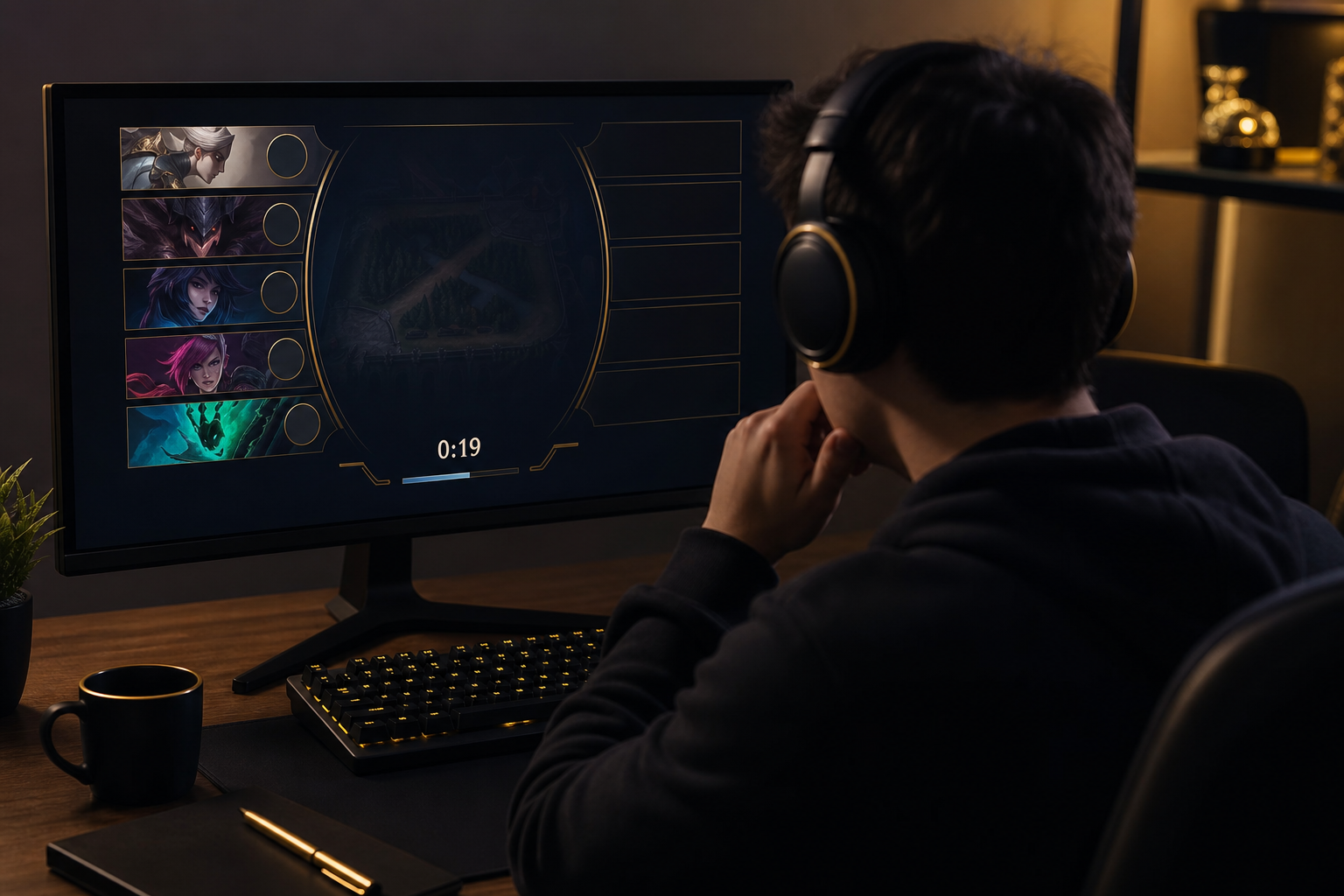
Twenty seconds on the clock. The enemy top laner is hovering Darius, and you know exactly how that lane goes — you eat a Q at level 1, get pulled in at level 3, and by minute 8 you're down 20 CS and two kills. Your cursor floats between your comfort Camille and a "safe" Malphite you've played maybe four times. The timer ticks. You lock something, and half the time it's the wrong call — not because you picked the wrong champion, but because you never learned how counter picks actually work. This lol counter picks guide breaks down the part of champion select that decides more games than most players admit, without pretending a counter is a free win.
Two failure modes trap most players. The first is ignoring counters entirely — blind-picking your main into a matchup that punishes you repeatedly, then losing lane through a hundred small bad trades before minute 8. The second is the opposite: over-obsessing on a "hard counter" from some list you found, locking a champion you've barely touched, then griefing the lane because you have no idea when your own power spikes hit. The coaching consensus on r/summonerschool's "How are you supposed to win lane?" thread is blunt about this — a favorable 2v2 still loses to the better mechanical player. A paper advantage does not override laning fundamentals.
So this guide explains how counters actually function: matchup severity tiers, why some counters matter far more than others depending on role and rank, and how to make the call while a live draft timer bleeds toward zero.
What a Counter Pick Actually Wins You (and What It Doesn't)
Here is the misconception that costs games: a counter pick is not a guaranteed win. It is a lane-advantage lever, and you still have to convert that lever into an actual lead on the map. The coaching platform iTero frames counters in exactly these terms — not as automatic victories but as tiers of early gold-lead pressure and draft strength. A hard counter buys you a favorable starting position. It does not play the lane for you.
Break the advantage down into the three concrete things a counter pick actually influences, and the picture gets useful fast.
Lane trading. A favorable matchup lets you win short trades around cooldowns and CS windows. When the enemy Q is down and yours is up, you have a window to poke or all-in that they can't answer. Multiply that across a lane phase and you're the one with the health and gold lead.
Roam and pressure timing. A lane advantage frees you to shove the wave and roam, or it forces the enemy to play passive and give up priority. Counter pressure isn't just about your lane — it's about what your lead lets you do to the rest of the map. A shoved-in enemy laner can't contest your jungler's objectives.
Scaling into mid-game. A counter can deny the enemy their power-spike window or let you reach yours ahead of schedule. If your matchup lets you hit your first item timing while they're still farming for theirs, that tempo compounds into the mid-game.
So why does a "paper counter" still lose? Because the player has to know the champion's punish windows and spikes to cash in the advantage. This is where the technical backbone comes in. A machine-learning study on ranked League outcomes found that including a player's experience with their selected champion — mastery, prior games played — significantly improves win prediction compared to models that ignore champion familiarity. In plain terms: "comfort on a champion" is a quantifiable variable, and it sometimes rivals raw matchup strength. A counter you can't pilot may be worse than a comfort pick you can.
A counter pick doesn't win the game — it hands you a lead you still have to spend correctly.
That study reframes the entire counter-pick decision. The theoretically strongest matchup is only strong in the hands of someone who knows the champion's power-spike timings, its combo cooldowns, and the exact moments it wants to fight. If you're piloting a champion you've played four times, you don't know those windows, and the advantage evaporates. You'll take the "winning" trade at the wrong moment, mistime your all-in, and hand the lead back.
Reinforce that with the r/summonerschool point again: favorable 2v2s still lose to better mechanics. Advantage on paper doesn't override laning fundamentals — wave control, spacing, trade timing. These are the skills that turn a draft-screen edge into a real one.
None of this means counters are irrelevant. It means the value of a counter is conditional. It depends on the tier of the matchup, the role you're playing, and the rank you're climbing through. Those three variables — tier, role, rank — determine how much a counter is actually worth to you in any given game. That's what the rest of this guide sorts out.
The Three Tiers of Counters: Hard, Soft, and Skill Matchups
Not all counters carry the same weight. iTero's lane analysis classifies matchups as hard, soft, or safe-blind, and Mobalytics draws a parallel line between lanes you can actively contest and lanes where you accept a CS deficit and play purely to scale. Combine those and you get a three-tier framework you can apply to any matchup in champion select.
Tier Lane difficulty Punish window Blind-pick safety Impact by rank
Hard counter Lose short trades; concede early push Enemy dictates most windows Unsafe to blind High in higher elo; less decisive in low elo
Soft counter Contestable; lose some trades, fight around CDs Real windows around enemy cooldowns Blindable with a lane plan Moderate; rewards matchup knowledge
Skill matchup Roughly even; decided by mechanics Symmetric windows both sides Safe to blind Low direct impact; player skill decides
The table gives you the categories. Reading real counter data correctly is what puts a matchup into the right box — and that's where most players go wrong.
The mistake is treating a single global win-rate number as gospel. iTero's win-rate methodology is direct about this: champion win rates are a noisy signal because they fluctuate by side, rank, and sample size. A champion's global win rate blends map side, every player tier, and sample sizes that vary wildly from matchup to matchup. Over-relying on one figure builds false confidence and produces misdrafts — you lock a "winning" matchup that the number only implied because of a side-specific skew or a tiny sample.
The esports publication Dignitas offers a clean illustration of how skewed a single number can get. In one recent season example, a poorly performing champion showed roughly a 0.77% pick rate against a 47% win rate — statistically disadvantaged before player skill even enters the equation. But the reverse distortion happens just as easily: a low sample or a side-specific quirk can make a genuinely even matchup look one-sided, or hide a real counter behind a middling average.
What separates a trustworthy matchup read from a misleading one is patch recency and sample size. A win rate pulled from the current patch with a healthy sample tells you something. A figure aggregated across three patches, both sides, and every rank tells you almost nothing about your specific lane. Cross-check the current patch's tier list and matchup data before you commit — the number is a starting point for the hard/soft/skill judgment, not the judgment itself.
How to Read a Matchup Before You Lock In
Sorting a matchup into a tier requires a method, not a gut feeling. Coach Chippys, a former professional top laner, teaches a hypothesis-first approach: before you ever play the lane, form a specific theory about how trades and spikes should work, then test it in-game and refine through replay review. Run this five-step evaluation in champion select and you'll know which tier you're in before minions spawn.

-
Identify power spikes — theirs versus yours. Note when each champion becomes strongest: level 2, first item, first ultimate. Whoever spikes first dictates the early lane. If the enemy owns the level-2 spike and you don't, you plan around surviving that window instead of contesting it.
-
Check range and trading pattern. Ranged versus melee changes everything. A melee champion into a ranged one gives up free CS and poke, and Skill Capped's bot-lane guidance flags levels 1–3 as the most punishing window for melee-into-ranged. Know whether you're the one being chipped down or the one doing the chipping.
-
Assess the all-in versus poke dynamic. Does the enemy win extended all-ins, or do they win by whittling you down over time? This single read decides whether you look to commit to fights or dodge trades entirely and wait for their poke to fall off.
-
Consider wave-clear and roam potential. Fast wave-clear enables roams and lane priority; slow clear locks you to the lane. If your champion shoves faster, you can leverage that into map pressure. If it clears slowly, you plan to farm and hold.
-
Confirm you can actually pilot the counter. The comfort variable is real and measurable. The same academic study on ranked outcomes shows champion experience materially affects win probability. Before you lock a counter, check the champion's kit and spikes against your own game history — a counter you can't pilot is a liability, not an advantage.
Run these five in order and the tier answers itself. A matchup where they spike first, out-range you, and win all-ins while you can't pilot the counter is a hard loss you should probably dodge. A matchup where windows are symmetric and you know the champion cold is a skill lane you take every time.
Counter Picking by Role: Where It Matters Most
Counter-pick leverage is not distributed evenly across the map. Skill Capped's champion-select coaching and bot-lane matchup guides make the case that where you invest your counter-pick attention should depend heavily on role. Some lanes reward a counter enormously; others barely move because of it.

-
Top lane — highest counter impact. Top is an isolated island with strong snowball potential, and Skill Capped argues top-lane matchups "have way more impact than any other role." Because the lane is cut off from the rest of the map, an advantage compounds with less interference. This is exactly why the optimal solo-queue order saves top for last pick — a counter here can decide the lane outright.
-
Mid lane — matchup- and priority-dependent. Mid counters matter, but roam potential and lane priority weigh as much as the head-to-head. A mid counter is only worth it if you can hold priority to enable roams. A "winning" mid matchup that can't shove and leave the lane converts far less than the win rate suggests.
-
ADC — range and synergy over hard counters. ADCs are frequently neutral and hard to counter directly, according to Skill Capped. Chasing an ADC counter is usually the wrong instinct. Prioritize your own comfort and bot-lane synergy with your support instead of trying to hard-counter the enemy carry.
-
Support — high agency, strong counter leverage. Supports have far more control over how bot lane plays out than ADCs do, which makes counter-picking support more practically valuable than counter-picking the carry. Engage-versus-enchanter dynamics decide the 2v2 as much as anything. If you want to swing bot lane in draft, the support slot is where the leverage lives.
-
Jungle — less about lane, more about clear and pathing. Jungle "counters" hinge on clear speed and gank pathing rather than a direct lane matchup. You aren't laning against the enemy jungler head-to-head, so the counter question becomes whether your clear and pathing let you contest their tempo and win the map.
Counter picking a top laner and counter picking an ADC are two completely different skills.
The recommended pick order follows directly from this: ADC first, then jungle and support, top last. Saving the highest-impact matchup slot for last maximizes your counter window where it matters most. Check the current tier list for your role to see which picks are actually strong on the live patch before you commit to this order.
Blind Pick vs. Counter Pick: Reading the Draft Order
The core tradeoff is comfort against theory. Blind-picking your main guarantees mechanical familiarity — which the ranked-outcome study shows measurably raises win probability — while holding a slot open for a counter risks landing on a champion you're less practiced with. The decision matrix below tells you which way to lean based only on research-supported criteria.
| Situation | Blind pick your main | Leave slot for counter |
|---|---|---|
| Pick order | You pick early / can't wait | You pick late (esp. top last) |
| Pool depth | Shallow pool, few options | Deep pool, real counters you can pilot |
| Rank / meta | Lower elo — fundamentals win | Higher elo — matchup edges convert |
| Comfort | Mastered comfort pick | You genuinely practice the counter |

The comfort-versus-theory tradeoff has a hard low-elo caveat, and it's worth taking seriously. Skill Capped argues counter picks "don't matter in low elo" because poor wave control and trading discipline make theoretical matchup advantages largely irrelevant below a certain rank. If you can't reliably freeze a wave or trade around cooldowns, the paper edge a counter gives you never materializes — the game is decided by fundamentals you haven't built yet. Below that threshold, invest your champion-select energy into playing something you know cold.
At higher elo the calculus flips. Players there have the wave control and trading discipline to actually convert a matchup edge, so the theoretical advantage becomes a real one. This is where leaving a slot open for a counter starts paying off consistently, especially in the top lane's outsized-impact slot.
But the champion-experience variable overrides both cases when the counter isn't in a pool you can pilot. If the "correct" counter is a champion you've barely played, blind-picking your comfort main is frequently the higher-expected-value choice regardless of rank. The ML study's finding holds across the board: a mastered pick you can execute under pressure beats a theoretically superior one you can't. Protect the slot that matters most for your role — often top — and default to comfort everywhere the counter isn't genuinely playable.
Turning a Counter Advantage Into a Lead
Locking the right champion is half the job. The half most guides skip is execution — what you actually do once the lane starts, whether you're the one with the advantage or the one eating it. Handle both cases.
Punishing a favorable matchup.
When you have the lead on paper, the goal is converting it before the enemy scales or your jungler forgets you exist.
Start with trading cadence. Vars' lane-improvement guidance is specific: trade when the enemy goes for last hits, and avoid trading when their minion wave is too large to absorb the return damage. Use abilities that hit both the enemy champion and the wave — that double-duty builds long-term lane control while you poke, because you're shaping the wave and dealing damage in the same action.
Decide between freeze and shove based on your win condition. Freeze to deny the enemy CS and set up ganks when your jungler is nearby; shove to enable your own roams and objective plays when the map calls for it. Don't do both randomly — pick the one that matches your plan for the game.
Respect their spike windows even when you're ahead. A counter advantage does not mean you fight into the enemy's item or level spike. If they're hitting a completed item that flips the matchup for 30 seconds, you back off during that window and re-engage after it passes.
Call jungle pressure. A losing enemy laner is a gank target, and your priority is the currency that buys map pressure. Ping your jungler, shove the wave, and convert your lane lead into something that affects the rest of the map.
Set one or two concrete matchup goals per game. Coach Chippys' framework is to define a specific benchmark — punish a particular cooldown, hit a defined CS number by ten minutes — and review your replays when you miss it. That benchmark is how you know whether you're actually exploiting the counter or just holding a lead you never spent.
Surviving when you're the one countered.
The counter cuts both ways, and how you play a losing lane separates a manageable deficit from a lost game.
Don't int. Accept a temporary CS deficit and play toward your core item spike. Picklepants, coaching for Mobalytics, teaches wave management, vision control, and accepting early deficits over trying to win lane outright into a strong counter. Skill Capped extends the point with a concrete benchmark: default to scaling champions that stay useful at two to three completed items, and treat those item thresholds as your acceptable early-deficit marker in hard lanes.
Run the survive-then-influence template. CounterStats describes the standard pattern for losing matchups — concede the early push, farm safely under tower, avoid unnecessary trades, and look to impact the map through roams or objective fights once the lane stabilizes. You aren't trying to win the 1v1 you were drafted to lose. You're trying to stay even enough to matter later.
Manage variance. CounterStats emphasizes deliberately keeping the game close enough that a single favorable fight or an enemy mistake can swing it. Reject the fatalistic "lost in draft" mindset. A bad lane is a problem to manage, not a sentence — the whole point of survive-and-scale is to still be in the game when your win condition arrives.
Your Champion Select Counter-Pick Checklist
Run this pre-lock routine every game. It turns the counter-pick decision from a gut call under a ticking timer into a repeatable process, with current-patch data supporting each step.
-
Confirm the enemy hover or likely pick. Watch hover states and lock order to predict who you're laning against. The earlier you can read the enemy's intended pick, the more time you have to plan your response instead of reacting blind.
-
Rate the matchup severity — hard, soft, or skill. Apply the tier framework from earlier. Cross-check the current patch's tier list and matchup data rather than trusting one global win-rate figure, since that number varies by side, rank, and sample size.
-
Check if the counter is in your playable pool. If you can't pilot it, comfort usually wins because of the champion-experience effect. A theoretically perfect counter you've played four times is a liability under pressure, not an advantage.
-
Weigh comfort against advantage given pick order. Late and last picks — especially top — get the biggest counter window and can afford to respond. Early picks lean toward comfort, since you're the one being reacted to rather than reacting.
-
Set your lane plan — punish window or survive-and-scale. Decide before minions spawn whether you're fighting for a lead or scaling to your item spike. Walking into lane without a plan wastes whatever edge the draft handed you.
-
Adjust in-game as items and levels shift the matchup. A hard early matchup can flip after your core item; a winning early lane can go even after their first back. Re-evaluate at each spike instead of playing the whole lane off your champion-select read.
The counter-pick decision is a process, not a coin flip — and current-patch matchup and tier data is what keeps that process accurate. Run this workflow with live matchup data from LoL Quick and the call gets faster and more reliable every game.
The best counter pick is the strong matchup you can actually pilot under pressure.
LoL Counter Picks: Quick Answers
-
Are counter picks worth it below a certain rank? Skill Capped argues counters "don't matter in low elo" because weak wave control and trading discipline erase the theoretical advantage a counter is supposed to provide. Below a certain rank, the paper edge never converts into a real one, so invest in fundamentals first — wave management, spacing, trade timing. Matchup edges start paying off reliably as your mechanics improve. If you're still losing lanes you "should" win, the fix isn't a better counter list; it's the underlying laning skills that let any advantage stick.
-
How often do counters change between patches? Frequently enough that a static list goes stale. Champion win rates and matchup strength shift with every balance patch, and iTero warns that a single global win-rate figure is a noisy signal that varies by side, rank, and sample size even within one patch. Re-check matchup data each patch rather than trusting a counter list you saved months ago. A pick that hard-countered a champion last patch may be even or reversed after a numbers change to either kit.
-
Should I first-pick a counter-able champion? Be careful. First-picking an easily countered champion hands the enemy a free counter window — they see your pick and respond with the exact answer. Skill Capped's pick-order logic pushes flexible, neutral, or high-comfort champions into early slots for this reason. If you must pick early, favor picks that don't get hard-punished by a specific answer, and save the counter-able specialists for later in the draft where you're the one reacting.
-
What if I don't own the counter champion? A counter you don't own or can't play well isn't a real option. Fall back on your strongest comfort pick — the champion-experience variable from the ranked-outcome study means a mastered pick often beats an unpracticed counter outright. Over time, build your champion pool deliberately so future counter windows are actually usable. The goal isn't owning every counter; it's owning enough playable answers that you're rarely forced to blind into a hard matchup with no response.